Oversized E-House Transport: Plan the Split Before Design Freeze
E
ETENZ•Editorial Team
A custom prefabricated enclosure for oversized equipment needs its transport strategy before design freeze. ETENZ coordinates route limits, module splits, interfaces, handling and site restoration to reduce delays and rework.
Projects with large drives, synchronous-condenser systems or long switchgear lineups can require an E-House beyond a practical road or port transport unit. A module that can be manufactured is not automatically a module that can pass every route, transfer point and unloading operation intact.
ETENZ treats the shipping split as part of E-House engineering, not a dispatch-stage workaround. Bringing logistics into the structure, equipment layout, cabling, thermal control, fire interfaces and documents early turns an oversized building into manufacturable, transportable and restorable units.
Walk the route before fixing module size
The RFQ should identify origin, destination, road and port conditions, transport mode, height, width and mass limits, turning constraints, bridges, loading and temporary-storage conditions. Route data is a design input that determines the envelope and number of shipping units.
The project should also distinguish an ISO-container-based module, a container-sized module, a skid package and a custom E-House. Similar appearance does not establish the same transport qualification or structural basis; accurate naming prevents incorrect assumptions during carriage, lifting and acceptance.
Define every split unit in its shipping condition
Each unit needs a defined equipment content, items removed for transport, temporary closure of openings, transport supports, packaging and moisture protection. Only a fixed shipping condition provides a consistent basis for mass, centre of gravity, support and handling checks.
For ultra-long VFD E-Houses or double-bay synchronous-condenser modules, ETENZ can develop the segmented structure from approved equipment layouts and route boundaries so manufacturing sequence, installation status and shipping units stay aligned.
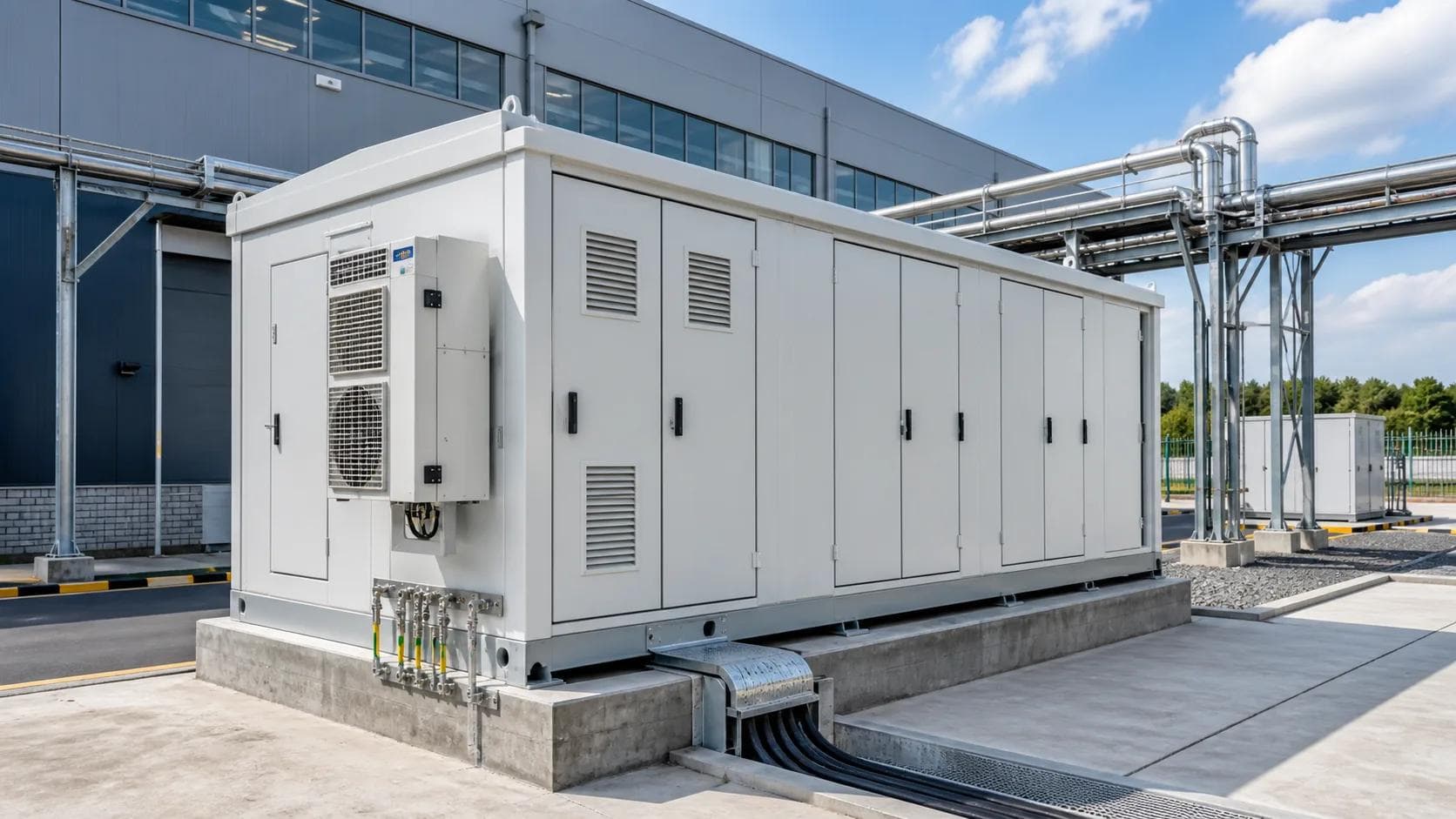
Shipping splits should align structural fabrication, equipment installation status and factory delivery sequence.
Place split lines around conflicts and design the restoration interfaces
A structural joint affects the base frame, walls, roof, weather sealing and insulation. Equipment zoning affects cabinet lineups, maintenance access and mass distribution. Electrical breakpoints affect bus, cables, grounding, controls, communications and auxiliary systems.
A good split plan defines alignment, joining, sealing, bonding, identification and reinspection—not only a cut line. Factory-completed work, transport removals and site-restored connections should match across drawings, interface schedules and packing lists.
Keep mass, centre of gravity and handling tied to the actual unit
Every shipment unit requires confirmation of transport mass, centre of gravity, support and handling basis from its actual equipment list. When equipment position, temporary support or removal status changes, the relevant data and lifting inputs change with it.
Rigging, lifting equipment, vehicles and site unloading should be confirmed by the responsible project parties from approved drawings, calculations, site conditions and the actual unit. Clear data handover protects the schedule better than a generic crane-ready note.
Close transport risk through packing and arrival inspection
Before dispatch, equipment and moving parts are secured; doors, louvers, openings, coatings, exposed interfaces and split faces are protected. Moisture, dust and packing requirements follow the route, and every temporary measure needs a removal or restoration instruction.
Arrival inspection covers structure, coating, seals, equipment fixing, temporary supports and interfaces, with damage, ownership, repair method and closure evidence recorded. Problems are then found before assembly rather than during cabling or final sealing.
Turn site reassembly into an executable work package
Handover documents for a split E-House assign sequence and responsibility for support and levelling, structural joining, restoration of weather sealing and insulation, bus or cable reconnection, grounding bonds, auxiliary-system restoration, testing and final closure.
ETENZ can organize split drawings, interface schedules, identification, packing lists, arrival checks and restoration steps as one delivery package. The site team receives a defined assembly route instead of deciding how modules connect after arrival.
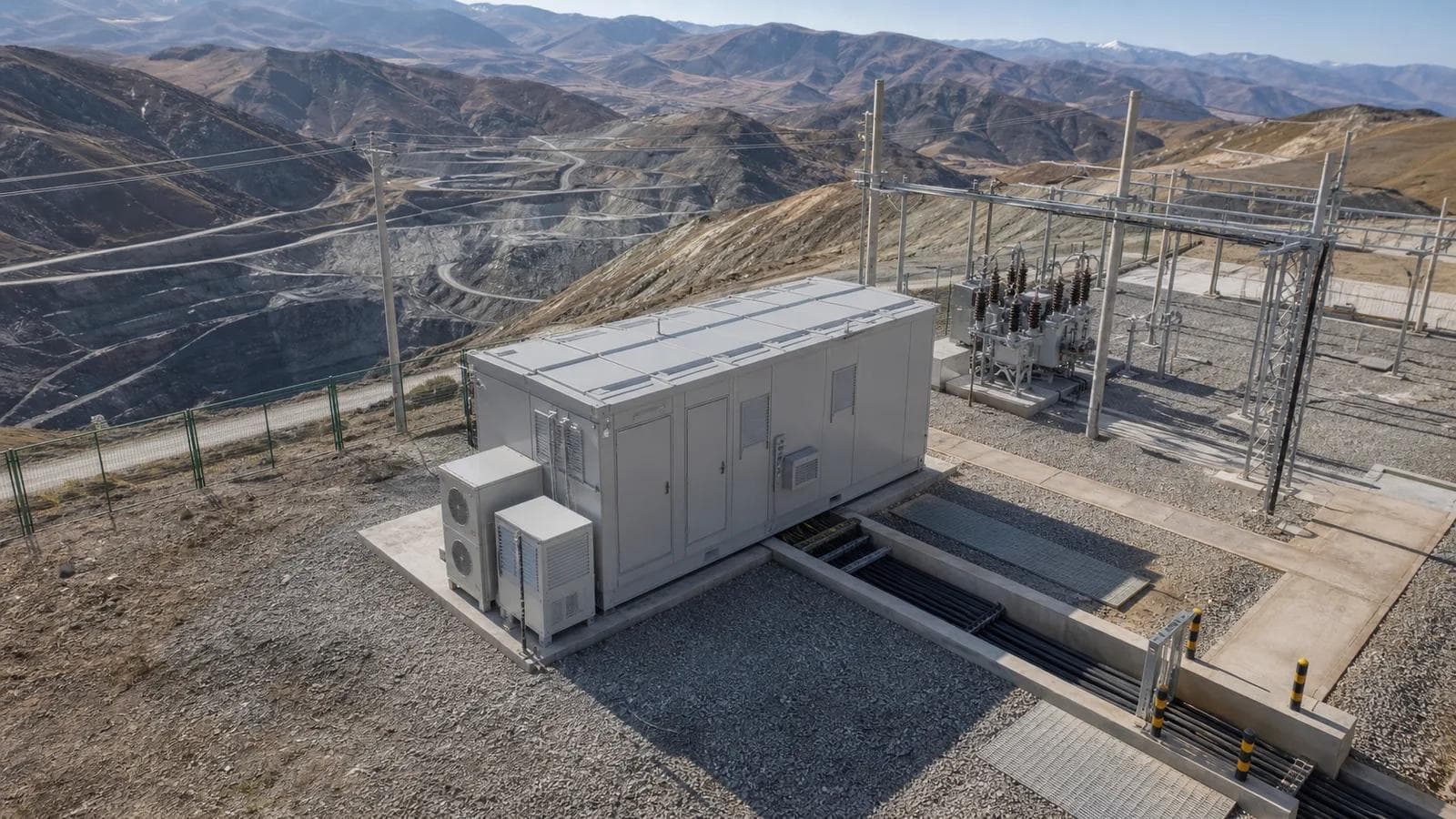
Clear split and restoration documents support phased transport, arrival inspection and site connection.
The advantage of an oversized E-House is not simply cutting a large module into smaller pieces. It is preserving structural, equipment, interface and document consistency after the split. Early planning reduces temporary modifications, site waiting and uncertainty during restoration.
Oversized E-House Transport: Plan the Split Before Design Freeze
E
ETENZ•Editorial Team
A custom prefabricated enclosure for oversized equipment needs its transport strategy before design freeze. ETENZ coordinates route limits, module splits, interfaces, handling and site restoration to reduce delays and rework.
Projects with large drives, synchronous-condenser systems or long switchgear lineups can require an E-House beyond a practical road or port transport unit. A module that can be manufactured is not automatically a module that can pass every route, transfer point and unloading operation intact.
ETENZ treats the shipping split as part of E-House engineering, not a dispatch-stage workaround. Bringing logistics into the structure, equipment layout, cabling, thermal control, fire interfaces and documents early turns an oversized building into manufacturable, transportable and restorable units.
Walk the route before fixing module size
The RFQ should identify origin, destination, road and port conditions, transport mode, height, width and mass limits, turning constraints, bridges, loading and temporary-storage conditions. Route data is a design input that determines the envelope and number of shipping units.
The project should also distinguish an ISO-container-based module, a container-sized module, a skid package and a custom E-House. Similar appearance does not establish the same transport qualification or structural basis; accurate naming prevents incorrect assumptions during carriage, lifting and acceptance.
Define every split unit in its shipping condition
Each unit needs a defined equipment content, items removed for transport, temporary closure of openings, transport supports, packaging and moisture protection. Only a fixed shipping condition provides a consistent basis for mass, centre of gravity, support and handling checks.
For ultra-long VFD E-Houses or double-bay synchronous-condenser modules, ETENZ can develop the segmented structure from approved equipment layouts and route boundaries so manufacturing sequence, installation status and shipping units stay aligned.
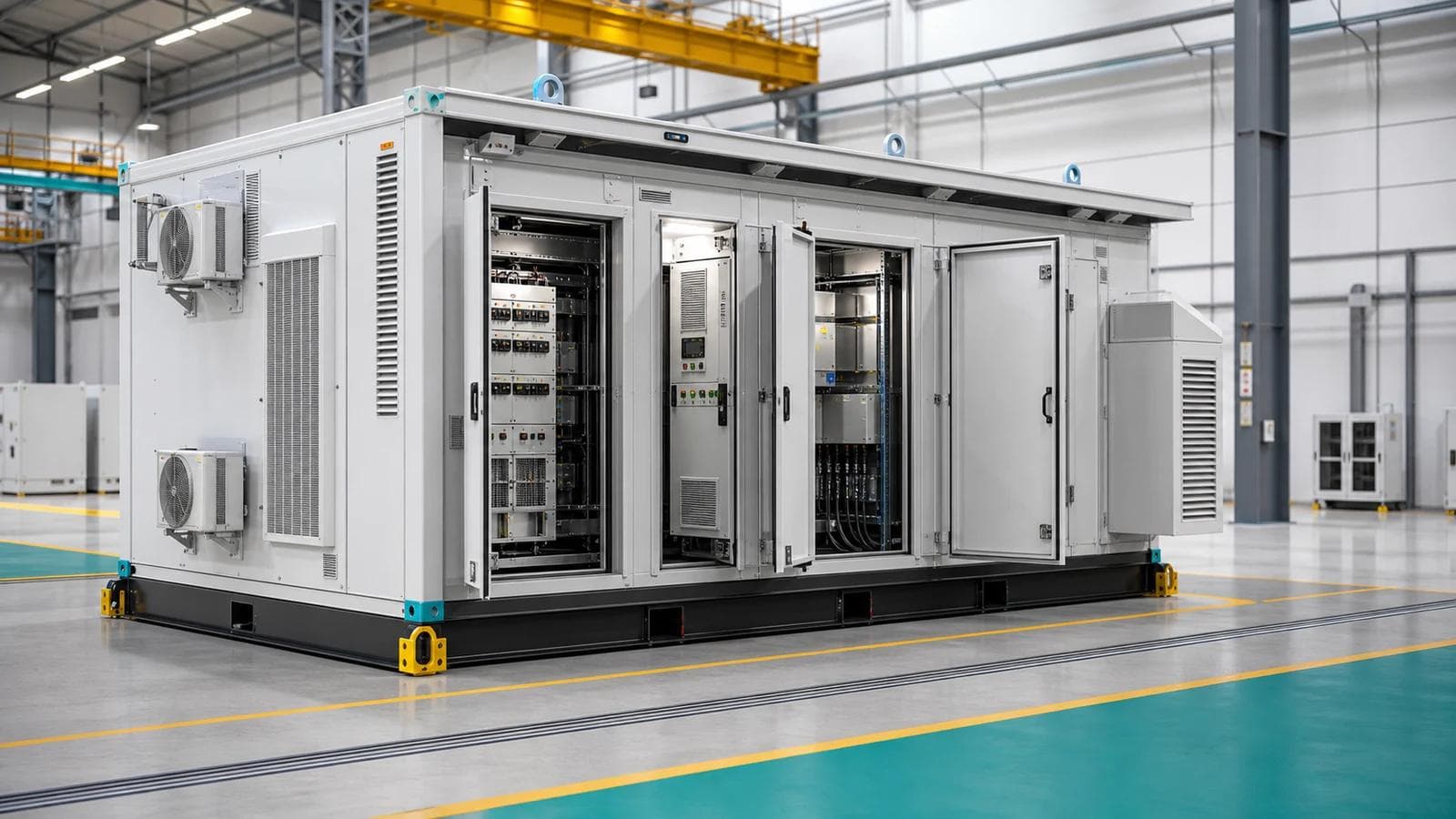
Shipping splits should align structural fabrication, equipment installation status and factory delivery sequence.
Place split lines around conflicts and design the restoration interfaces
A structural joint affects the base frame, walls, roof, weather sealing and insulation. Equipment zoning affects cabinet lineups, maintenance access and mass distribution. Electrical breakpoints affect bus, cables, grounding, controls, communications and auxiliary systems.
A good split plan defines alignment, joining, sealing, bonding, identification and reinspection—not only a cut line. Factory-completed work, transport removals and site-restored connections should match across drawings, interface schedules and packing lists.
Keep mass, centre of gravity and handling tied to the actual unit
Every shipment unit requires confirmation of transport mass, centre of gravity, support and handling basis from its actual equipment list. When equipment position, temporary support or removal status changes, the relevant data and lifting inputs change with it.
Rigging, lifting equipment, vehicles and site unloading should be confirmed by the responsible project parties from approved drawings, calculations, site conditions and the actual unit. Clear data handover protects the schedule better than a generic crane-ready note.
Close transport risk through packing and arrival inspection
Before dispatch, equipment and moving parts are secured; doors, louvers, openings, coatings, exposed interfaces and split faces are protected. Moisture, dust and packing requirements follow the route, and every temporary measure needs a removal or restoration instruction.
Arrival inspection covers structure, coating, seals, equipment fixing, temporary supports and interfaces, with damage, ownership, repair method and closure evidence recorded. Problems are then found before assembly rather than during cabling or final sealing.
Turn site reassembly into an executable work package
Handover documents for a split E-House assign sequence and responsibility for support and levelling, structural joining, restoration of weather sealing and insulation, bus or cable reconnection, grounding bonds, auxiliary-system restoration, testing and final closure.
ETENZ can organize split drawings, interface schedules, identification, packing lists, arrival checks and restoration steps as one delivery package. The site team receives a defined assembly route instead of deciding how modules connect after arrival.
Clear split and restoration documents support phased transport, arrival inspection and site connection.
The advantage of an oversized E-House is not simply cutting a large module into smaller pieces. It is preserving structural, equipment, interface and document consistency after the split. Early planning reduces temporary modifications, site waiting and uncertainty during restoration.